
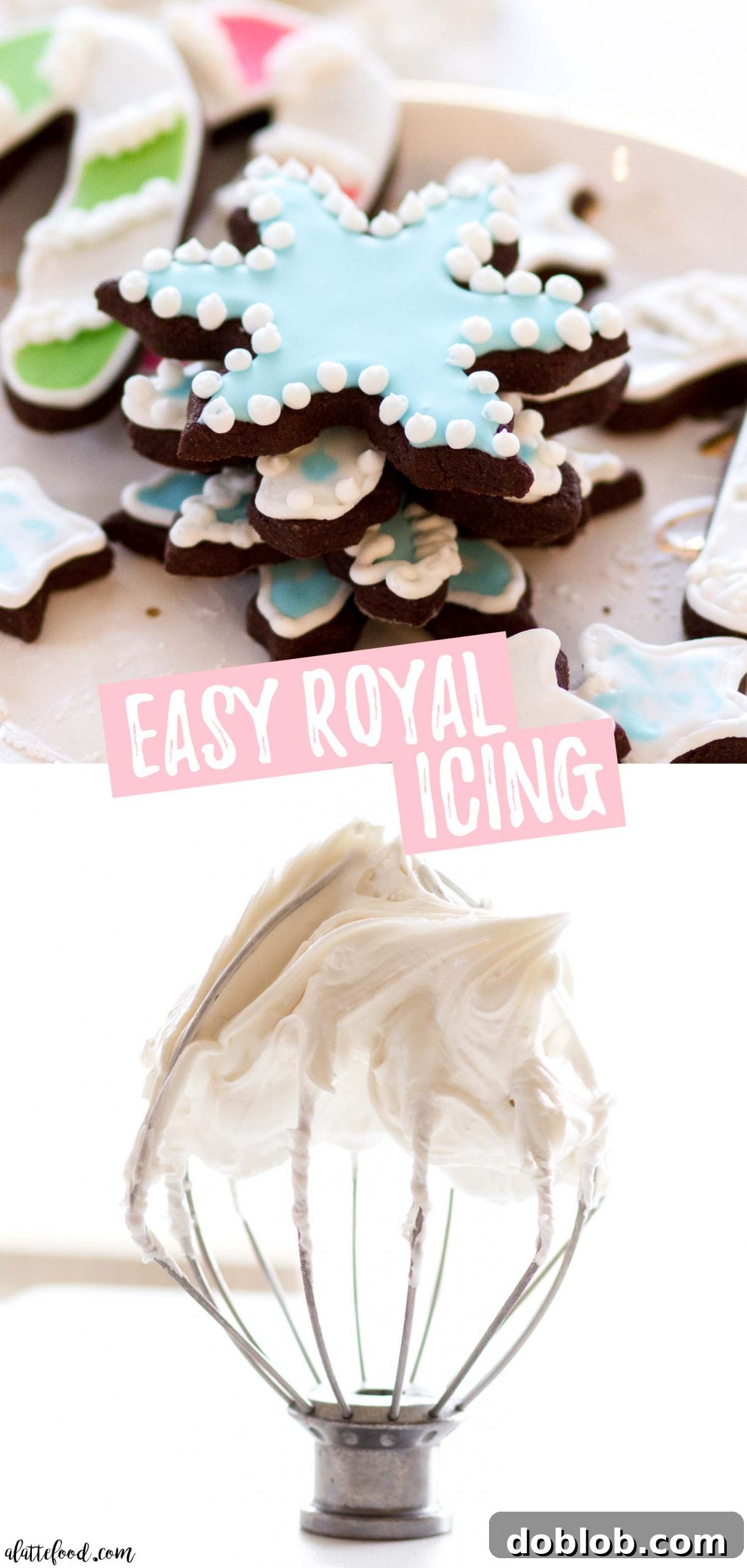
This Easy Royal Icing Recipe is my favorite icing for sugar cookies. It’s a simple royal icing recipe perfect for piping intricate designs, and it is nearly impossible to mess up, making it ideal for beginners. Crafted with meringue powder, this recipe eliminates the need for raw egg whites, offering a safe and reliable option. The result? The prettiest, professional-looking icing for your favorite rollout sugar cookies.

Mastering the Art of Cookie Decorating with the Best Royal Icing Recipe
There’s an undeniable charm that comes with a perfectly decorated sugar cookie. Whether it’s the crisp edges of a holiday design, the vibrant hues of edible art, or the delicate details that tell a story, these treats captivate both the eye and the palate. At the heart of creating such edible masterpieces often lies royal icing – a decorator’s best friend for its smooth finish and hard-drying properties. Forget intimidation; crafting impeccable royal icing at home is far simpler than you might imagine, especially with this easy-to-follow, beginner-friendly recipe.
For me, the holiday season and Christmas cookies go hand-in-hand. It’s a time of year where my kitchen transforms into a baking haven, filled with the comforting aromas of sugar and spice. From classic soft-baked cutout Christmas cookies and simple chewy sugar cookies to spicier options like molasses cookies, no season passes without whipping up several batches.
While a luscious vanilla buttercream is often my default for classic frosted sugar cookies – a truly timeless and delicious choice – there’s nothing quite like the elegant, polished look that royal icing lends to sugar cookies. The visual appeal is particularly striking when contrasting colorful royal icing against rich, dark chocolate sugar cookies, creating truly gorgeous results. And here’s the best part: you absolutely don’t need to be a professional cookie artist to achieve stunning decorations. My own journey as a home baker is proof that with this easy royal icing recipe, you can decorate cookies as simply or as elaborately as your heart desires.
Understanding Royal Icing: The Foundation of Beautiful Cookies
At its core, royal icing is a hard-setting icing made from powdered sugar, a liquid (typically water), and a stabilizer, which can be fresh egg whites or, in this modern and user-friendly recipe, meringue powder. It’s celebrated for its ability to dry completely hard and smooth, forming a crisp shell that not only looks professional but also protects your decorated treats, making them stackable and easy to transport without smudging. This characteristic makes it the ultimate choice for detailed cookie decorating, constructing gingerbread houses, and creating intricate cake adornments.
Many traditional royal icing recipes call for raw egg whites, which can raise concerns about food safety and sometimes be tricky to work with consistently. This recipe thoughtfully bypasses those issues by utilizing meringue powder. Meringue powder is a fantastic culinary invention, typically consisting of dried egg whites, cornstarch, and various food gums and stabilizers. It offers all the benefits of egg whites—excellent structure, volume, and hard-drying properties—without any of the fuss. It’s safe, convenient, and delivers consistently beautiful results every time, making it the perfect ingredient for both seasoned decorators and absolute beginners.
The Simple Ingredients Behind Perfect Royal Icing
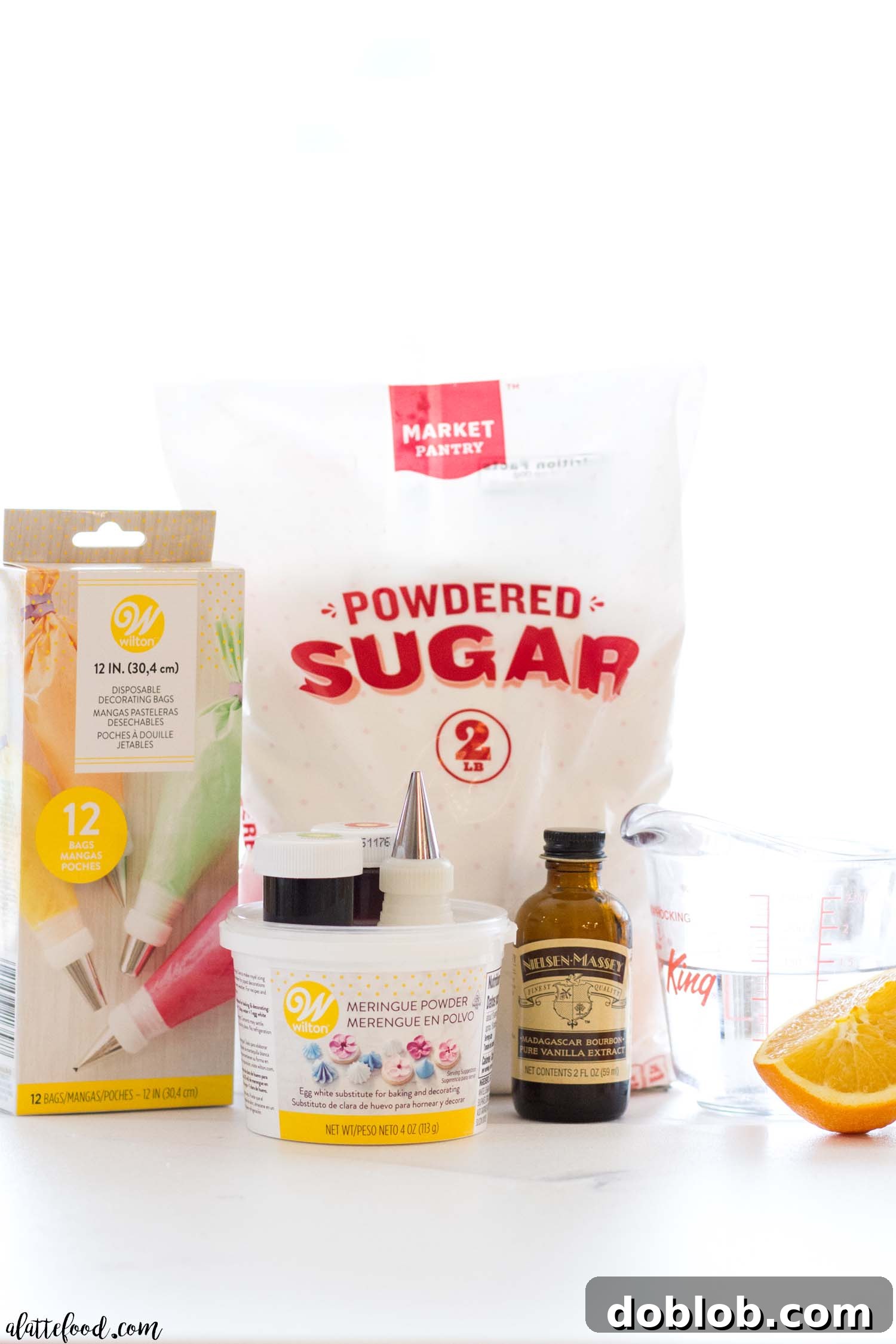
Creating exceptional royal icing requires just a handful of common ingredients. Each component plays a vital role in achieving the desired texture, flavor, and long-lasting finish. Let’s explore what makes each ingredient indispensable in this easy royal icing recipe:
- Powdered Sugar (Confectioners’ Sugar): This is the primary structural component of royal icing. Its extremely fine texture is crucial for achieving a smooth, lump-free icing that flows beautifully from a piping bag and dries to a flawless, uniform surface. The small amount of cornstarch often present in powdered sugar also helps prevent caking and aids in stability. For the smoothest results, consider sifting your powdered sugar before mixing.
- Meringue Powder: As highlighted, this is our star ingredient. It acts as a powerful stabilizer, enabling the icing to whip into stiff peaks and dry to a durable, crisp finish. Opting for meringue powder over raw egg whites provides consistent performance, eliminates food safety worries, and simplifies the preparation process, making this recipe incredibly reliable.
- Water: The liquid component essential for bringing the dry ingredients together and adjusting the icing’s consistency. Precise, gradual addition of water is key to transitioning from a stiff piping consistency to a thinner flooding consistency.
- Orange Juice (Freshly Squeezed Recommended): While many recipes traditionally use lemon juice for its tartness and aid in setting, I personally prefer the subtle, sweeter citrus notes of fresh orange juice. It brightens the flavor of the icing and provides a lovely counterpoint to the sweetness of the powdered sugar. If orange isn’t your preference, lemon juice is an excellent substitute, or you can simply use extra water for a neutral flavor.
- Vanilla Extract (or Almond Extract): These extracts are crucial for imparting a delicious flavor to your royal icing, preventing it from tasting merely “sweet.” Pure vanilla extract offers a classic, warm, and inviting aroma, while almond extract provides a delicate, nutty depth that pairs exceptionally well with many cookie recipes. Choose a high-quality extract for the best flavor impact.
- Gel Food Coloring: For vibrant and beautiful cookies, gel food coloring is highly recommended. Unlike liquid food colorings, gel colors are super-concentrated, meaning you need only a tiny drop to achieve rich, intense hues without significantly altering the icing’s consistency. This prevents the icing from becoming too thin and ensures your colors pop!
Detailed Steps: How to Make Foolproof Royal Icing at Home
Making royal icing is less about complex techniques and more about proper ingredient incorporation and achieving the right consistency. Here’s a detailed guide to whipping up perfect royal icing every time:
- Prepare Your Mixer: Begin by placing your powdered sugar and meringue powder into the bowl of a stand mixer fitted with the whisk attachment. If you don’t have a stand mixer, a powerful hand mixer will also work wonderfully. Give the dry ingredients a brief whisk on low speed to ensure they are thoroughly combined and there are no lumps of meringue powder.
- Add Liquids Gradually: Pour in the initial quantity of water (start with 6 tablespoons, as humidity can affect how much is needed), the fresh orange juice (or your chosen substitute), and the vanilla extract. Start mixing on the lowest speed to gently incorporate these liquids with the dry ingredients. This crucial step prevents a cloud of powdered sugar from escaping the bowl and keeps your kitchen clean!
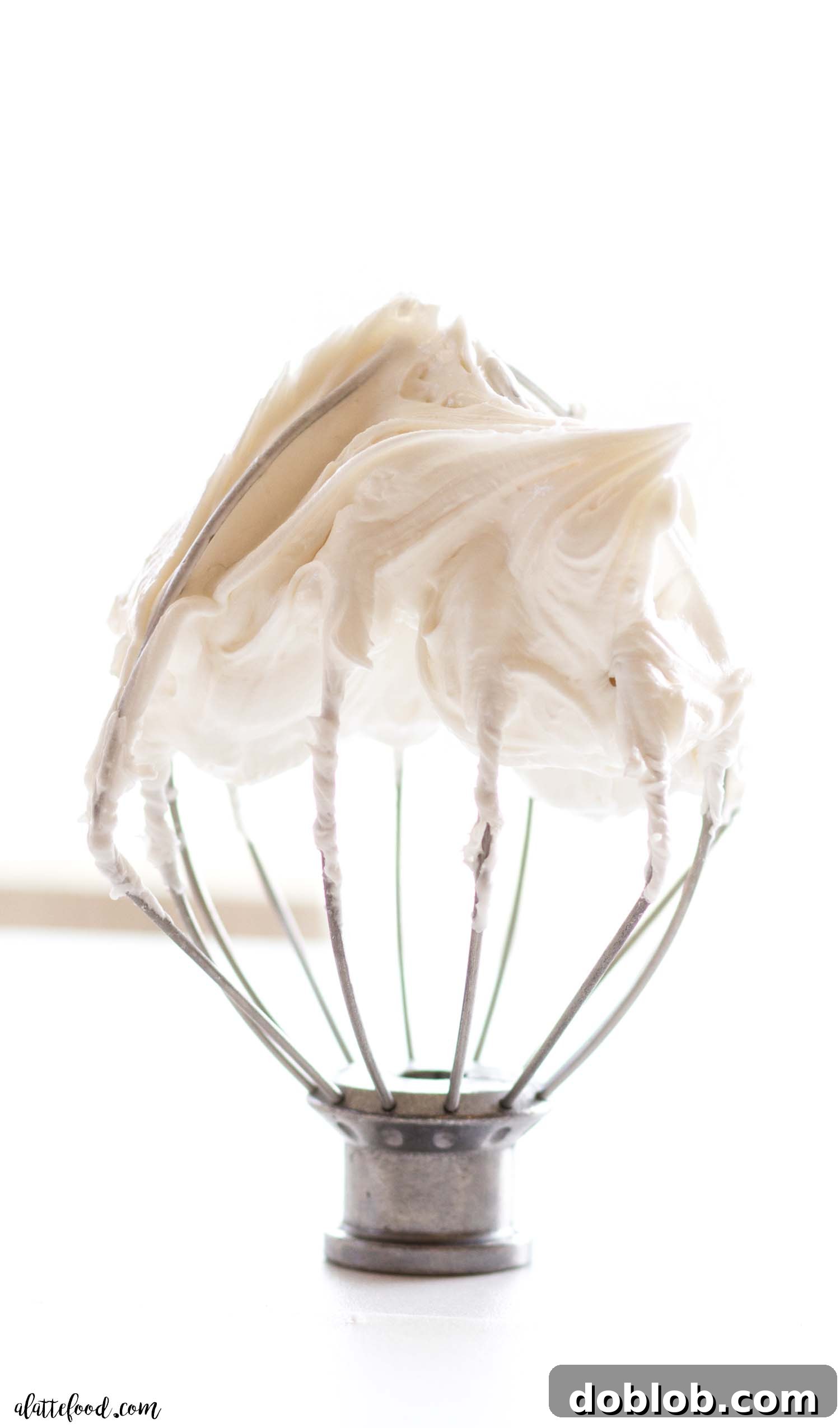
- Whip to Stiff Peaks: Once the mixture is loosely combined and no dry pockets remain, increase the mixer speed to medium-high. Continue to whip the icing for about 5 to 7 minutes. You’re looking for the icing to transform into a thick, glossy, and smooth consistency that holds stiff peaks. To test, lift the whisk: the icing should stand straight up without drooping or collapsing. This “stiff peak” consistency is your ideal piping and outlining icing.
- Color Your Icing (Optional): If your decorating plans involve multiple colors, now is the time to divide the stiff-peak icing into separate bowls. Add your chosen gel food coloring in very small increments, mixing thoroughly after each addition until you achieve your desired hue. Remember, gel colors are potent, and the color often deepens slightly as it rests.
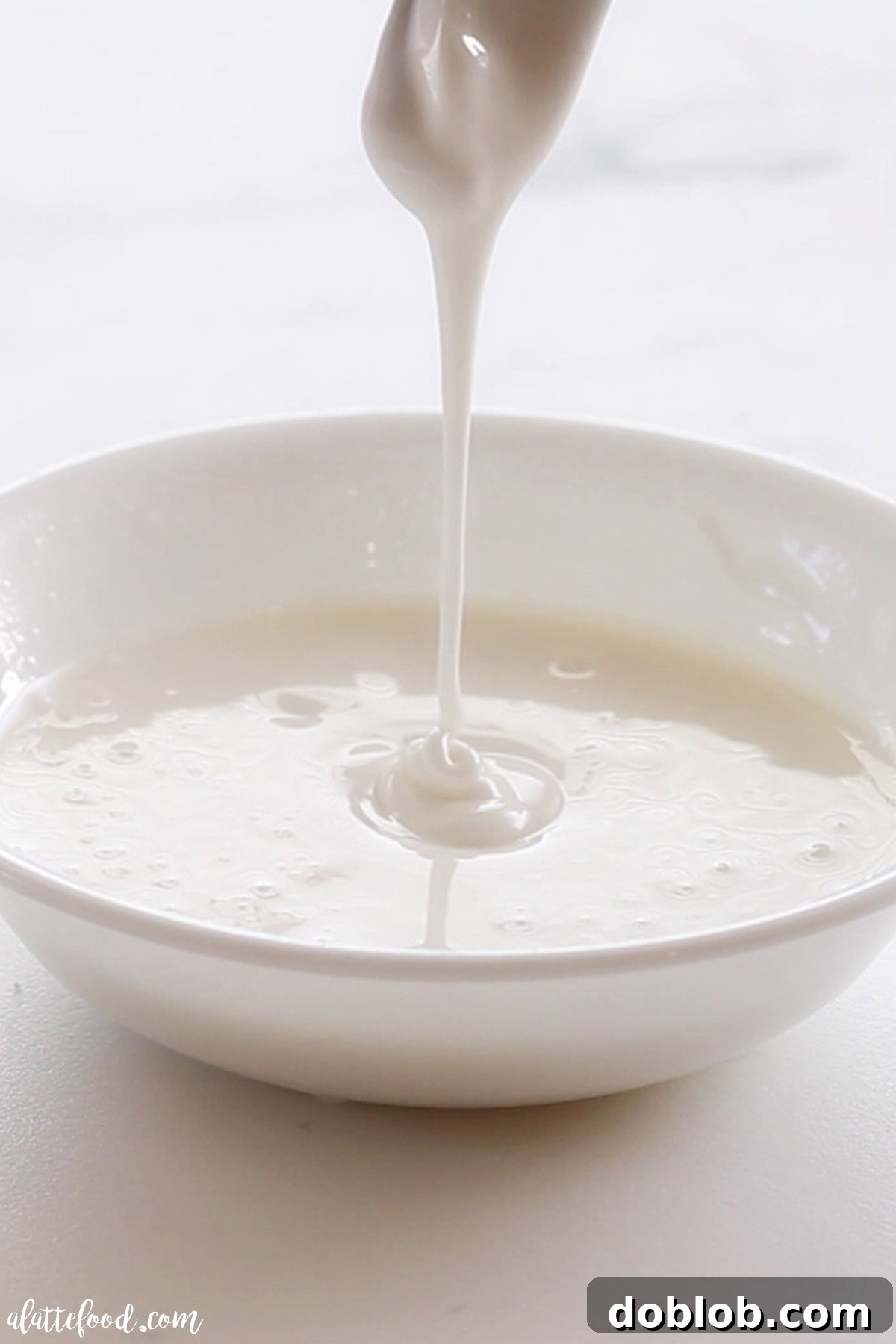
- Achieve Flooding Consistency: For the portions of icing you’ll use to fill in large areas of your cookies, you’ll need to thin it down. Add water, a single teaspoon at a time, mixing well after each addition. Continue this process until the icing reaches a “flooding” consistency. It should be thick enough to hold its shape once applied but thin enough to drizzle smoothly off a spoon and self-level on the cookie surface.
Mastering Royal Icing Consistencies for Flawless Decorating
The secret to successful royal icing decoration lies in understanding and precisely adjusting its consistency. There are two main consistencies you’ll work with:
- Piping (Outline) Consistency: This is the initial stiff consistency you achieve after whipping all the ingredients. It should be firm enough to hold sharp, defined lines and intricate details without any spread. When you dip a spoon into it and lift it, a peak should form and stay upright without curling or falling. This thicker consistency is perfect for creating borders around your cookies, adding fine details, writing text, and constructing structural elements.
- Flooding Consistency: This is a thinner, looser consistency used to fill in the areas outlined with piping icing. To determine if your flooding icing is just right, employ the “10-second rule”: Drizzle a line of icing across the surface of the icing in its bowl. Count how many seconds it takes for that line to completely disappear and merge back into the main body of icing. For optimal flooding, you’re aiming for the line to disappear within 8 to 12 seconds. If it vanishes quicker, it’s too thin; incorporate a little more powdered sugar. If it takes longer, it’s too thick; add another tiny drop of water. This consistency should flow smoothly to create an even, self-leveling surface within your piped borders.
One of the most forgiving aspects of royal icing is its adaptability. If your icing ever becomes too stiff, simply add a minuscule amount of water, stirring until it loosens to your preference. Conversely, if it turns out too thin, gradually mix in a spoonful of powdered sugar to thicken it. Always make small adjustments to avoid over-correcting.
What Does Royal Icing Taste Like? A Flavorful Experience
Contrary to popular belief that royal icing is merely sweet and bland, a well-prepared batch, like this recipe, offers a delightful taste experience. While the inherent sweetness from the powdered sugar is present, the inclusion of fresh orange juice introduces a lovely, subtle citrus tang that brilliantly cuts through the sugariness. This zestful addition prevents the icing from being one-dimensionally sweet. Furthermore, the vanilla or almond extract infuses a warm and inviting aroma, rounding out the flavor profile and ensuring that your royal icing doesn’t just look amazing but truly enhances the taste of your sugar cookies. I confidently promise, this is a royal icing that actually tastes good!
Where to Find Meringue Powder: Your Key Ingredient Source
Meringue powder is an indispensable item for any aspiring or experienced cookie decorator, and fortunately, it’s quite readily available. You can typically locate it in the baking or cake decorating sections of most major craft stores across the United States, such as Michael’s, Joann Fabrics, or Hobby Lobby. Many larger grocery stores that boast comprehensive baking supplies might also stock it. For those who prefer the convenience of online shopping, Amazon and specialized baking supply websites are excellent resources. However, it’s worth noting that due to certain food regulations, especially in states like California, some online retailers may have shipping restrictions. Therefore, always a good idea to check local availability first.
Essential Royal Icing Decorating Techniques for Stunning Cookies
Even if you’re a complete novice to cookie decorating, mastering just a couple of fundamental royal icing techniques will allow you to create impressively beautiful cookies:
- Piping (Outlining): This technique utilizes the thicker, stiff consistency royal icing. Its primary function is to create a clean “dam” or border around the design area on your cookie. This border acts as a barrier, effectively preventing the thinner flooding icing from flowing off the edges. Piping is also perfect for adding intricate details, delicate lines, personal messages, or small decorative elements to your cookies. Observe the image above—the stiff icing on the whisk perfectly illustrates how well this consistency holds its shape.
- Flooding (Filling): After you’ve piped an outline and allowed it to set briefly, flooding is the technique used to fill in the larger, enclosed areas of your cookie with the thinner, runnier consistency royal icing. You’ll gently squeeze the flooding icing into the center of your outlined area, then use a toothpick or a scribe tool to spread it evenly to the edges and pop any air bubbles. The picture below beautifully demonstrates the ideal flooding consistency, dripping smoothly from a spoon, ready to create a seamless finish.
- Pro Tip for Efficiency: Always prepare your entire batch of royal icing to the stiff “piping” consistency first. From this base, you can then divide the icing into separate bowls for different colors or for the portions you intend to thin for flooding. It’s significantly easier and more consistent to thin thick icing by adding water than it is to thicken thin icing by trying to incorporate more powdered sugar.

Must-Have Royal Icing Tools for a Smooth Decorating Experience
While creativity is key, having the right tools can elevate your royal icing decorating from challenging to effortlessly enjoyable. You don’t need a full professional setup, but these essential items will make the process much smoother:
- Piping Bags: These flexible bags are indispensable for controlled application of royal icing. Disposable piping bags are a popular choice for their convenience, especially when working with numerous colors, eliminating the need for extensive cleanup. Reusable silicone bags are also an eco-friendly option.
- Piping Tips: These small, interchangeable nozzles attach to the end of your piping bags and dictate the size and shape of the icing line.
- Small Round Tips (e.g., Wilton #1, #2): Ideal for extremely fine details, delicate lettering, intricate lace patterns, and tiny dots that add precision to your designs.
- Medium Round Tips (e.g., Wilton #3, #4): These are my personal favorites and highly versatile. They are perfect for outlining cookies, creating thicker lines, and medium-sized dots. If you’re starting your collection, a #3 or #4 tip is an excellent foundational choice.
- Couplers: A two-piece plastic device that fits inside a piping bag, allowing you to easily swap out different piping tips without changing the entire bag of icing. This is incredibly practical when you want to use the same color for both outlining and then adding a different detail.
- Squeeze Bottles: While piping bags can be used for flooding, many decorators find squeeze bottles to be a cleaner and more efficient tool for this particular technique. Their narrow tips provide excellent control for pouring the thinned flooding icing, minimizing leaks and mess, and making the process feel less wasteful.
- Toothpicks or Scribe Tool: These unassuming tools are incredibly valuable. They are used to gently spread thinned icing to the edges of your piped borders, pop any frustrating air bubbles that appear during flooding, and create delicate swirls or intricate patterns in wet icing. A dedicated scribe tool offers a fine point, but a standard toothpick works perfectly for most beginner applications.

Expert Royal Icing Decorating Tips for Flawless Cookies
Creating beautifully decorated cookies with royal icing combines careful technique with a touch of patience. Follow these expert tips to achieve professional-looking results right from your kitchen:
- Always Pipe a Border First (for Flooding): This is arguably the most critical step when using the flooding technique. Use your stiff piping consistency icing to create a precise, clean border around the entire edge of the area you intend to fill. This border acts as a crucial barrier, preventing the thinner flooding icing from flowing off the cookie. For optimal results, allow this piped border to set and dry for about 5 to 10 minutes before proceeding with flooding.
- Strategically Flood Your Cookies: When filling in your cookie, apply the flooding icing by piping it in a zig-zag motion or small circles, gradually working your way towards the center. Avoid overfilling; leave a small, discernible gap between the flooding icing and your previously piped border. Then, take a toothpick or your scribe tool and gently guide the icing to the very edges of the border, ensuring complete, smooth coverage and a clean, defined look. This method helps prevent overflow and creates a polished finish.
- Eliminate Air Bubbles: As you flood your cookies, small air bubbles might appear on the surface of the wet icing. These bubbles, if left unattended, can create unsightly craters once the icing dries. Use your toothpick or scribe tool to gently touch and pop any visible air bubbles immediately after flooding to ensure a perfectly smooth surface.
- Explore Wet-on-Wet Techniques: For truly stunning marbled or blended designs, apply a second color of flooding consistency icing directly onto the first layer of flooding icing while it is still wet. For example, after flooding a cookie with a base color, immediately drop dots or pipe lines of another color onto the wet surface. Then, use a toothpick to gently drag through these fresh applications to create beautiful swirls, intricate hearts, or other artistic patterns. The colors will meld seamlessly, resulting in a flat, smooth, multi-colored design once dry.
- Allow Layers to Dry Completely: If your design involves adding raised details, layering different colors, or creating elements that you want to stand out, it is absolutely essential to allow each layer of royal icing to dry completely before applying the next. This patience prevents colors from bleeding into each other and ensures that your designs maintain their crisp, defined edges. Drying times can vary significantly based on the thickness of the icing and ambient humidity, but typically, allow each layer at least 2 to 4 hours, or even overnight, for best results.
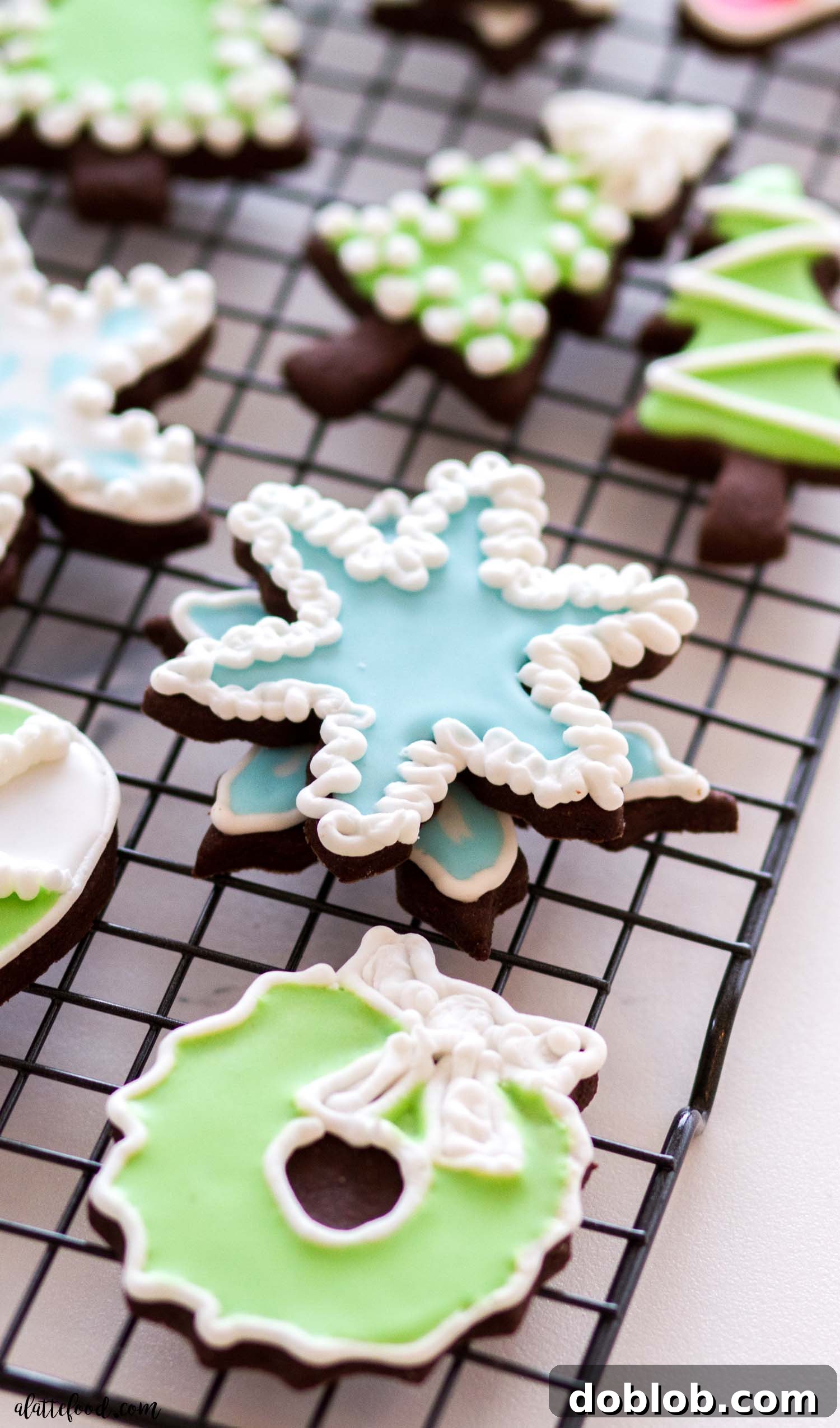
For a dynamic, visual demonstration of these techniques, including piping, flooding, and wet-on-wet designs in action, you can refer to the helpful video tutorial often associated with this recipe. It’s an invaluable resource for beginners to see each step clearly executed.
Troubleshooting Common Royal Icing Issues
Even with the best recipe and careful execution, occasional challenges can arise when working with royal icing. Don’t worry, most common issues are easily fixable:
- Craters or Holes in Flooded Areas: This problem typically stems from trapped air bubbles or icing that is too thin. Immediately after flooding, use a scribe tool or toothpick to gently poke and pop any visible air bubbles. If the icing consistently forms holes, it might be too runny; gradually add a tiny bit more powdered sugar to thicken your flooding consistency.
- Icing Cracking During Drying: Cracking often occurs if the icing is applied too thickly, or if the drying environment is excessively humid. Ensure your flooding consistency adheres to the 10-second rule. If humidity is a factor, try using a fan on its lowest setting, pointed *away* from the cookies, to gently circulate air, or consider using a dehumidifier in your workspace.
- Colors Bleeding Together: This issue commonly arises when wet icing comes into contact with other wet icing, or when a vibrant, dark color is applied over a light color that hasn’t fully dried. To prevent bleeding, always allow base layers of royal icing to dry completely before adding contrasting colors on top, unless you are intentionally creating a wet-on-wet effect. Using high-quality gel food coloring also reduces the likelihood of bleeding, as cheaper liquid dyes are often more prone to it.
- Icing Not Drying Hard or Remaining Tacky: If your royal icing feels sticky or fails to dry to a firm, hard finish, it’s usually an indication that the icing is too thin (lacking sufficient meringue powder in relation to water and sugar) or that your environment is too humid. Double-check your meringue powder measurements and ensure the cookies are drying in a relatively dry, well-ventilated area.
Storage Tips for Royal Icing and Decorated Cookies
Proper storage is essential to maintain the freshness of your royal icing and preserve the beauty of your decorated cookies:
- Storing Prepared Royal Icing: Unused royal icing can be stored at room temperature for up to two weeks. To prevent a crust from forming on the surface, press a piece of plastic wrap directly onto the surface of the icing, ensuring no air pockets remain, before sealing it in an airtight container. When you’re ready to use it again, simply stir it gently. If it seems too stiff, add a tiny amount of water; if it’s too thin, a touch of powdered sugar will bring it back to the desired consistency.
- Storing Decorated Cookies: Once your royal icing has completely dried (this can take anywhere from 4 to 24 hours, depending on icing thickness and humidity), your decorated cookies are quite durable. Store them in an airtight container at room temperature for several weeks. For optimal preservation of your designs, layer the cookies carefully between sheets of parchment paper to prevent any scuffing or sticking. Decorated royal icing cookies also freeze exceptionally well for up to 3 months; simply thaw them at room temperature before serving.

Easy Royal Icing Recipe
Ingredients
- 4 cups powdered sugar
- 3 Tbsp meringue powder
- 6-7 Tbsp water
- 2 Tbsp orange juice, fresh*
- 1/2 tsp vanilla extract
- gel food coloring
Instructions
-
With a standing mixer with a whisk attachment (or a hand mixer), whisk powdered sugar, meringue powder, water (starting with 6 Tbsp of water), and vanilla extract.
-
As the mixture begins to come together, add in orange juice. Whip on medium speed until the icing holds stiff peaks.**
-
Divide the icing into separate bowls and tint with gel food coloring (if you only want to use white royal icing, you can omit this step). This is the piping consistency for royal icing.
-
For flooding, thin the royal icing with water, beginning with a teaspoon at a time until it’s at the desired consistency (it should be thick enough to hold its shape, yet thin enough it drizzles off of a spoon).
-
When decorating, pipe a border around the edge of your cookies. Flood the centers of the cookies, then use a toothpick to spread the icing to the edges. Allow the icing to set before adding more decorating details (if you are planning on using the wet on wet technique, you can read in the post for more tips).
-
Allow the cookies to air dry (about 4 hours) before stacking on top of each other.
Notes
**The best thing about royal icing is that if the icing is too stiff, you just add a little more water until it’s at your desired consistency. If it’s too thin, add in a bit more powdered sugar.
***Recipe for the cutout chocolate sugar cookies.
The nutrition facts provided are calculated using a third-party tool and are estimates only. Actual nutritional content may vary based on the ingredients and brands you use, as well as portion sizes. For accurate results, please consult a registered dietitian or nutritionist.
Make sure to tag me on Instagram and leave a rating below and let me know how it turned out!
More Delicious Cookie & Frosting Recipes You’ll Love
If you enjoyed mastering royal icing, why not try some other fantastic cookie and frosting recipes to expand your baking repertoire? Each recipe is designed to be approachable and delicious, perfect for any home baker.
Easy Sugar Cookie Frosting (Classic Vanilla Buttercream)
Perfect Soft Baked Cutout Sugar Cookies
Decadent Cutout Chocolate Sugar Cookies